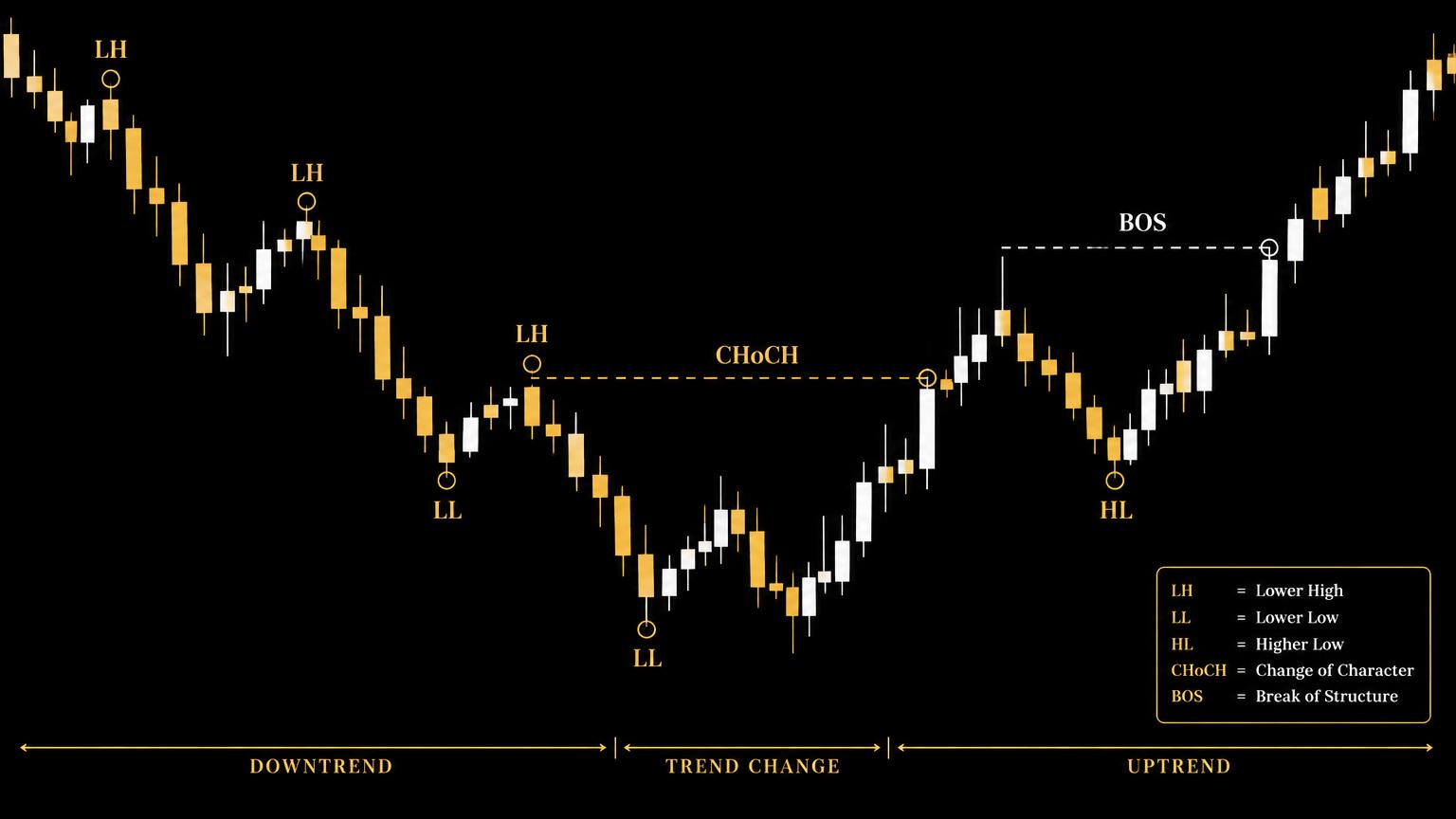
Beginner – Intermediate
Supply & Demand
Find the price zones where big buyers and sellers stepped in, then wait for price to return to them.
The idea
Price moves when there's an imbalance between buyers and sellers. When large orders hit the market, price leaves an area quickly with strong candles. Often, not every order was filled — so when price comes back to that area, the remaining orders can push it away again.
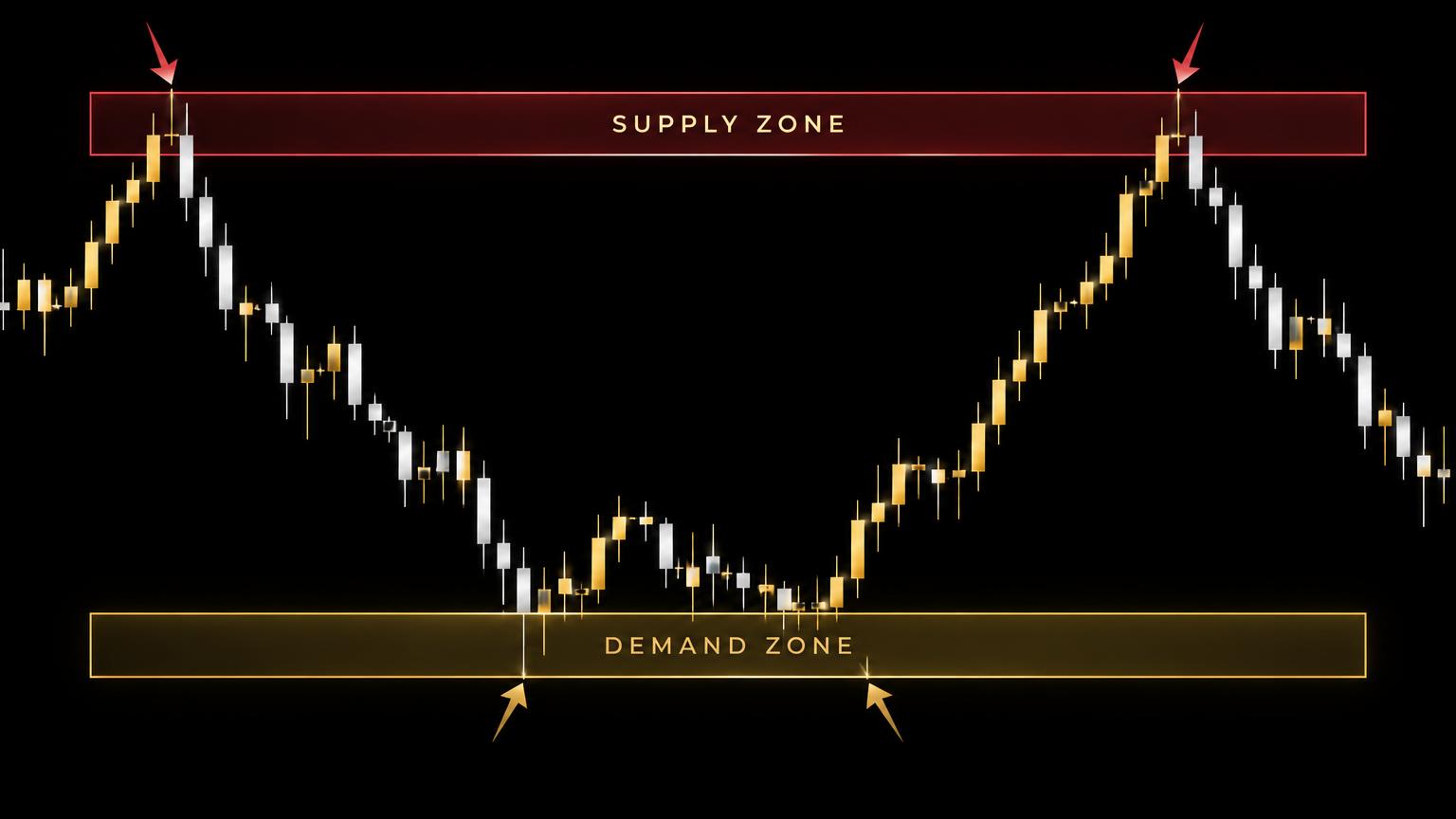
Demand and supply zones
A demand zone is the base price rallied sharply up from: buyers were in control. A supply zone is the base price dropped sharply from: sellers were in control. Mark the last small candles before the strong move — that's your zone.
Planning the trade
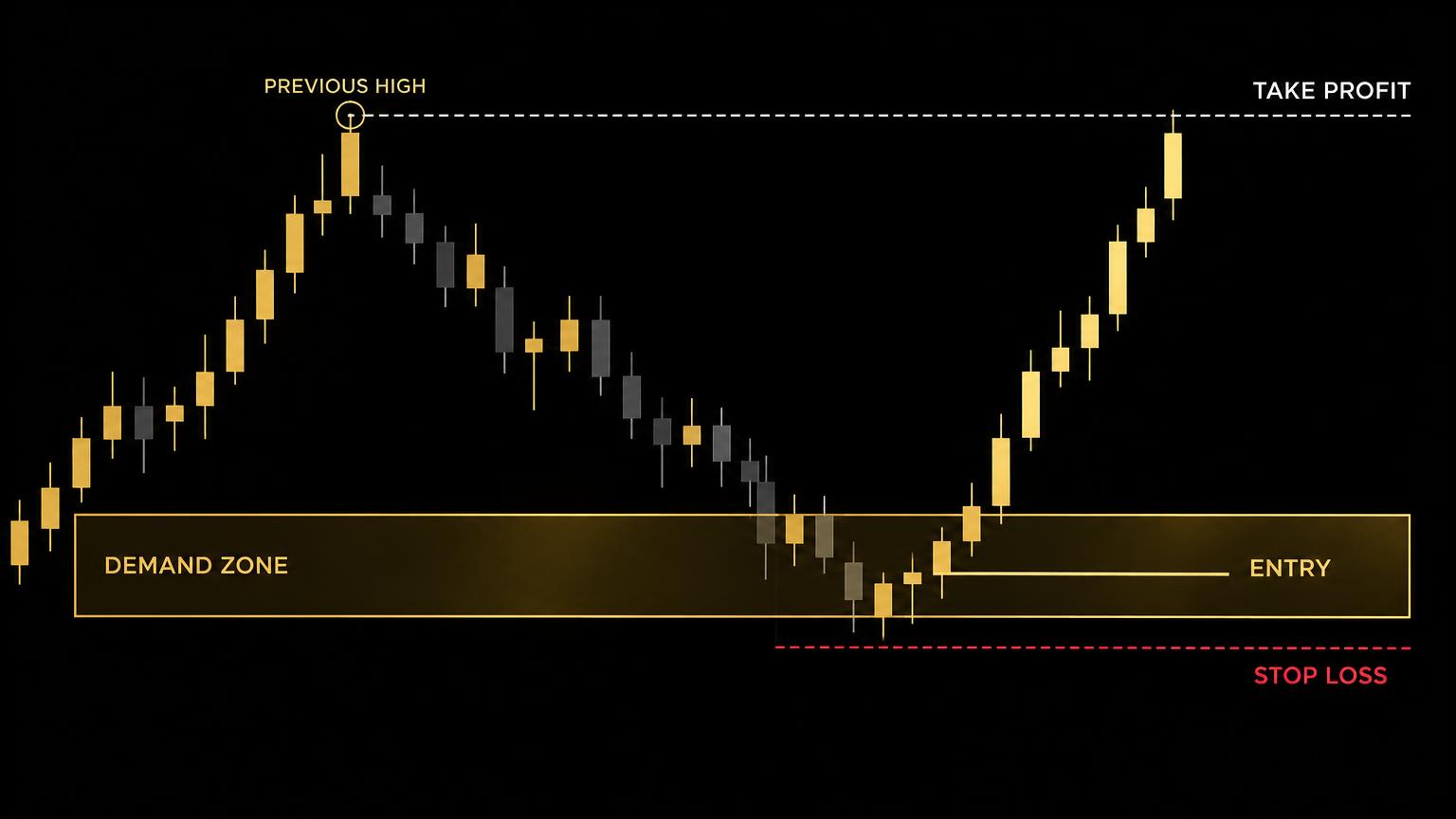
Wait for price to return to a fresh zone. For a demand zone, a possible entry sits inside the zone, the stop-loss just below it, and the target near the previous high. Look for a reaction — such as a bullish candle or a break of structure on a lower timeframe — before committing.
KEY RULES
- › Prefer fresh zones that haven't been retested yet.
- › The stronger and faster the move away, the better the zone.
- › Trade in the direction of the higher-timeframe trend.
- › Always define your stop-loss before you enter.
- › Aim for at least 1:2 risk-to-reward.
Educational content only. Not financial advice.